
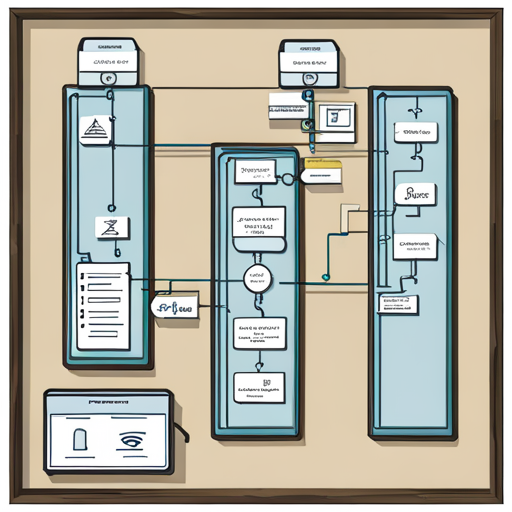
Traditional Operations Support Systems (OSS) and Business Support Systems (BSS) have become a bottleneck to rapid telecommunications and cable service design and delivery. Data, voice, and video products, services, network resources, and infrastructure must now be decoupled to enable independent innovation and evolution at each of these management domains. Communication and connectivity products should be designed and offered that are decoupled from underlying networking technologies (5G wireless, fiber, coax, etc.), and services should be able to be designed as either atomic or composite — composite services may include multiple underlying network technologies under a single product offering (for example, a point-to-point service utilizing both wireless and wireline network resources). As the Telecommunications and Cable industry move into a converged access world of intent-based provisioning and activation, a new architectural paradigm is required to support back-office operations.
Workflow automation for network convergence.
Workflow automation is the process of using technology to streamline, automate, and optimize repetitive and manual tasks in a business process. It involves designing, executing, and monitoring workflows — a series of steps or activities that must be completed to achieve a specific business outcome. The technology often includes cloud-native software executing as atomic functions with well-defined interfaces, such as RESTful APIs or Kafka messages. These software functions can then be reused across many different workflows, depending on business use cases and expected outcomes.
This effectively means decomposing the legacy OSS/BSS proprietary and closed technology stacks into a set of reusable cloud-native microservices, each performing a specific task.
Designing workflows using BPMN.
How are such workflows defined and specified? Business Analysts and Product Owners are generally not software developers. How can workflow requirements be captured and communicated to the development and DevOps teams for implementation and deployment into production?
Applications such as Camunda provide workflow automation. The platform is primarily built for Java developers and provides tools and infrastructure to design, execute, and monitor business processes and decisions. Camunda BPMN provides a workflow engine that supports the Business Process Model and Notation (BPMN) standard for modeling and executing business processes — a powerful and flexible way to define, automate, and orchestrate complex workflows. While Camunda is an open-source software platform, BPMN is a graphical notation and standardized language for modeling and visualizing business processes. BPMN 2.0 is the second and current version of the notation, released in January 2011 by the Object Management Group (OMG). The Camunda Modeler is a desktop or web application for modeling BPMN diagrams — it allows users to design and validate process and decision models before deploying them to the Camunda workflow engine.
BPM-compliant design tools.
The Camunda Modeler enables non-development teams — Business Analysts, Process Engineers, and Solutions Architects — to graphically model workflows using the BPMN 2.0 semantics. There are other BPMN-compliant applications that enable users to graphically build workflows, and these diagrams can be exported for consumption by the Camunda open-source platform through a BPMN 2.0 XML file interchange format. This file format is specified by OMG for interoperability across software vendors supporting the BPMN notation standard.
Interoperability is the ability to exchange information between two systems and to use the information that has been exchanged — thus reducing vendor lock-in. Example applications include Cameo Business Modeler Plugin for MagicDraw UML, Visual Paradigm, and bpmn.io. When selecting a BPMN design tool, it is important to evaluate whether the application supports both import and export of workflow designs using the BPMN 2.0 XML file interchange format.
A simple example.
Let's look at a simple example: design a BPMN 2.0 diagram for purchasing a book at an online bookstore with different shipping charges based on domestic or international shipping. This represents our intent as a Business Analyst, Product Owner, Process Engineer, or Solutions Architect. The following workflow was built diagrammatically using bpmn.io:
Once the design stage is complete for the workflow, the desire is to hand this design off to the development team for implementation, test, and deployment into production. This example was exported to an ecommerce_shipping.bpmn file from bpmn.io. In the case of the development team using Camunda for process orchestration, the Camunda Modeler can simply import this file and render the same workflow graphically for a different set of users. The development team can begin using this workflow from the Camunda Modeler for development of the corresponding software. The reverse process could also be used where the development team makes modifications to the workflow in Camunda Modeler and sends the exported BPMN file back to the design team for review and approval.
Conclusion.
As the Telecommunications and Cable industry move toward a network-convergence model for service delivery, new design and architecture paradigms are necessary. Shortening the design cycle is imperative to support rapid prototyping and MVP development. Using a design language such as Business Process Model and Notation allows Business Analysts, Product Owners, Process Engineers, and Solutions Architects to specify business workflows using graphical tools — Cameo Business Modeler, Visual Paradigm, and bpmn.io. These applications support the BPMN 2.0 XML file interchange format for ease of interoperability between design tools and development platforms such as Camunda for workflow development and execution. This decreases the technology gap between designers and developers and accelerates time to market for cloud-based microservices.